
How entrepreneurs turn low footfall, limited visibility, and remote locations into competitive advantages
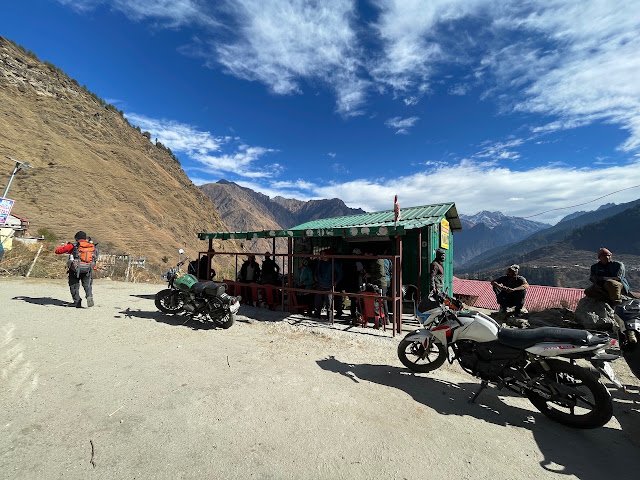
Would you open a business in a place where almost everyone told you not to?
A location with low footfall.
Limited visibility.
Few businesses nearby.
Difficult accessibility.
On paper, it sounds like a terrible business location.
Yet, some businesses don’t just survive in these places—they thrive.
So what are these entrepreneurs seeing that others aren’t?
The answer may be that a “bad location” isn’t necessarily a bad business opportunity. Sometimes, the location is only a disadvantage if the business depends entirely on passing customers.
A strong business can create its own reasons for customers to visit.
1. Why Location Matters in Business
“Location, location, location.”
It’s one of the oldest principles in business.
For many traditional businesses, location can directly influence:
- Customer footfall
- Visibility
- Accessibility
- Competition
- Rent
- Convenience
- Brand exposure
A café on a busy street has thousands of potential customers passing by every day.
A shop hidden away from the main road doesn’t have that advantage.
This creates an obvious question:
How can a business compete when customers aren’t naturally coming to it?
This is where entrepreneurship and marketing become interesting.
2. Is There Really Such a Thing as a “Bad Location”?
A location can be bad for one business and excellent for another.
Imagine two businesses:
Business A: Depends on spontaneous customers.
Business B: Gives customers a strong enough reason to travel specifically to it.
The same location could be a disadvantage for Business A but an opportunity for Business B.
This changes the question from:
“How many people pass this location?”
to:
“How many people are willing to come here specifically for what we offer?”
That’s a completely different way of thinking about location.
3. Why Would an Entrepreneur Choose a Risky Location?
Choosing a remote or less attractive location isn’t always a bad decision.
Sometimes, there is a strategic reason behind it.
Lower operating costs
Prime locations usually come with higher rents.
An entrepreneur may choose a less expensive location and invest the savings into:
- Better products
- Marketing
- Customer experience
- Staff
- Technology
- Interior design
The business may sacrifice footfall but gain financial flexibility.
Less competition
Busy commercial areas can also mean intense competition.
A remote location might have fewer competitors competing for the same customers.
Instead of fighting for a small percentage of an existing market, the entrepreneur may be able to become the default choice for a specific customer group.
An underserved market
Sometimes the biggest opportunity exists where businesses are missing.
A neighbourhood might have:
- No good café
- No quality restaurant
- No convenient grocery store
- No specialist service
- No entertainment option
The lack of businesses isn’t always a warning sign.
Sometimes it’s a market gap.
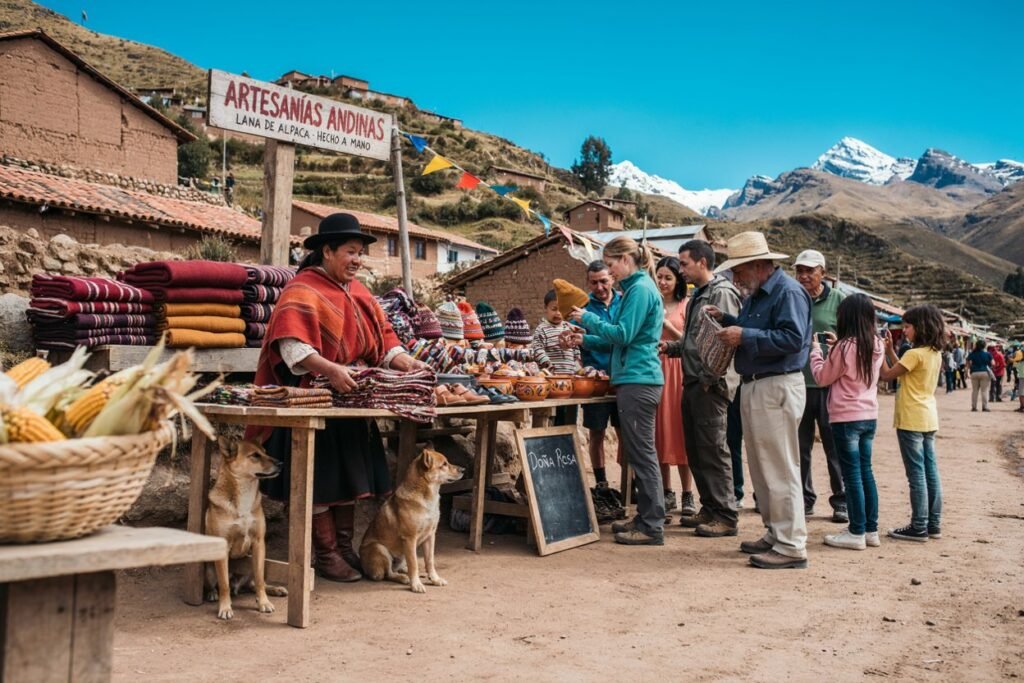
4. The Difference Between a Shop and a Destination
This is one of the most important ideas in this entire discussion.
A normal shop might depend on:
“People are already here, so they might come inside.”
A destination business operates differently:
“People are coming here because they specifically want us.”
Think about businesses people are willing to travel for.
They may travel because of:
- A unique product
- Better quality
- Reputation
- Price
- Customer experience
- Social media popularity
- Recommendations
- A memorable atmosphere
- Something they can’t easily find elsewhere
At that point, the business is no longer relying completely on its location.
The business itself becomes the destination.
5. How Marketing Can Overcome Location
This is where I believe the relationship between marketing and location becomes particularly interesting.
A poor location creates a visibility problem.
Marketing can help solve that problem.
1. Social Media
Instagram, TikTok, YouTube and other platforms can introduce a business to customers who would never discover it naturally.
A business doesn’t necessarily need thousands of people walking past it if thousands of people are seeing it online.
2. Word of Mouth
A customer who has an exceptional experience can become a marketer for the business.
They tell:
- Friends
- Family
- Colleagues
- Online communities
A remote business can gradually build a reputation that pulls customers toward it.
3. Google Search and Maps
For businesses that rely on customers physically visiting them, being discoverable online is extremely important.
A customer might not know the business exists.
But they may search:
“Best restaurant near me”
or
“Best café in [area]”
The business doesn’t need to be on the busiest road if it can still be found when the customer is actively looking.
4. Creating a Unique Experience
If the product is easily available everywhere, customers have little reason to travel.
But if the experience is unique, distance becomes less important.
This is why differentiation matters.
6. The Customer’s Real Question
Customers don’t usually think:
“Is this business located in a prime commercial area?”
They think:
“Is it worth going there?”
That changes everything.
If a customer has to travel 20 minutes, the business needs to provide enough value to justify those 20 minutes.
That value could be:
Better product + Better experience + Better price + Better trust + Something unique
The stronger the value proposition, the more customers may be willing to overcome inconvenience.
7. The Entrepreneurial Mindset
Perhaps the biggest difference between these businesses and others isn’t the location.
It’s how the entrepreneur interprets the location.
One person might look at an empty area and say:
“There aren’t enough customers here.”
Another might ask:
“Why aren’t there any businesses here?”
And a third might ask:
“What customers are being ignored here?”
That final question can lead to opportunity.
Entrepreneurs often don’t succeed because they have perfect conditions.
They succeed because they identify opportunities within imperfect conditions.
8. The Risks They Still Have to Overcome
Of course, choosing a risky location doesn’t automatically make a business successful.
These businesses can face serious challenges.
Low initial awareness
Customers may not even know the business exists.
Higher customer acquisition costs
The business may need to spend more on marketing to attract its first customers.
Accessibility
If the location is difficult to reach, some potential customers may simply choose an alternative.
Dependence on repeat customers
A remote business often needs strong customer retention.
Cash-flow pressure
Low initial footfall can make the early months financially difficult.
Lack of visibility
Without strong signage, digital presence, or word-of-mouth, the business can remain invisible.
This is why a good product alone isn’t enough.
The entrepreneur has to build demand.

9. From Risk to Competitive Advantage
Interestingly, the same factor that initially looks like a disadvantage can sometimes become an advantage.
Remote location
→ Lower rent
Low competition
→ Stronger market position
Limited footfall
→ Focus on destination customers
Difficult discovery
→ Stronger digital marketing
Small customer base
→ Focus on loyalty and retention
Lack of visibility
→ Build a recognizable brand
This doesn’t mean every bad location can become successful.
It means:
A disadvantage can sometimes be converted into a strategic advantage.
10. What Can Marketers Learn From These Businesses?
There are several important lessons.
Lesson 1: Don’t confuse visibility with demand.
A business can have enormous visibility and still have weak demand.
A less visible business can succeed if it has strong customer demand.
Lesson 2: Find the underserved customer.
Sometimes the opportunity isn’t where everyone is competing.
It’s where nobody is serving the customer properly.
Lesson 3: Give customers a reason to choose you.
If your location isn’t convenient, your value proposition needs to be strong enough to compensate.
Lesson 4: Customer experience can become marketing.
A great experience creates stories.
Stories create recommendations.
Recommendations create customers.
Lesson 5: Build a destination, not just a storefront.
The goal isn’t always to get people to notice where you are.
Sometimes the goal is to make people want to come to you.
11. The Bigger Business Lesson
A location is only one part of the business equation.
A successful business also depends on:
Customer + Problem + Value Proposition + Product + Marketing + Experience + Execution
A perfect location cannot save a business that doesn’t solve a meaningful problem.
And an imperfect location doesn’t necessarily destroy a business that provides exceptional value.
This is why entrepreneurs need to look beyond the obvious.
Instead of asking:
“Is this a good location?”
Ask:
“Is there a customer here who needs what I’m offering?”
And then:
“Can I create enough value for that customer to choose me?”
Conclusion
So, can a bad location become a great business?
Yes—but not simply because the entrepreneur takes a risk.
It happens when the entrepreneur understands the market, identifies an underserved need, creates meaningful value, and builds enough reason for customers to overcome the inconvenience of the location.
The most interesting businesses aren’t always the ones sitting on the busiest streets.
Sometimes they’re the ones hidden away, serving customers who are willing to make the journey.
Because ultimately:
A bad location doesn’t always mean a bad business opportunity.
Sometimes, the lack of competition is the opportunity.
And perhaps the better question isn’t:
“Is this a bad location?”
It’s:
“What would make people come here?”
About the Author
Raheel Valappil is a marketing professional passionate about understanding how businesses grow, how customers make decisions, and how brands turn problems into opportunities.
Through his marketing research and case studies, he explores consumer behaviour, brand strategy, digital marketing, customer experience and business growth.
Follow Raheel for more marketing case studies, research, trends and practical insights.